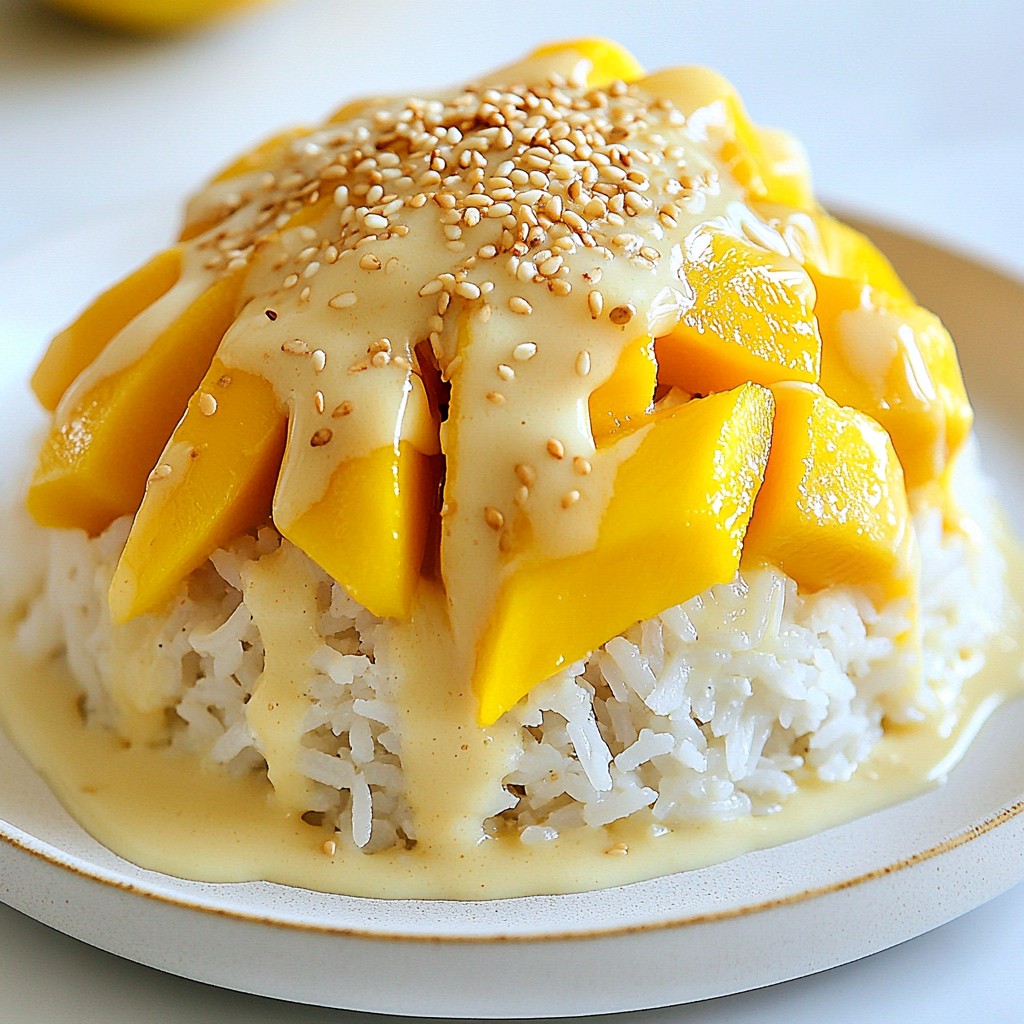
Thai Mango Sticky Rice is a delicious and easy treat that you can make at home. If you love sweet, creamy, and fruity desserts, you’ll enjoy this classic Thai dish. With just a few ingredients and simple steps, you’ll impress your family and friends. Let’s dive into this delightful recipe and learn how to create a perfect finishing touch to any meal!
Why I Love This Recipe
- Exotic Flavors: This dessert combines the sweetness of ripe mangoes with the rich creaminess of coconut milk, creating a delightful taste experience.
- Textural Contrast: The sticky rice is perfectly soft and chewy, while the fresh mango adds a juicy burst, making each bite satisfying.
- Easy to Make: With straightforward ingredients and simple steps, this recipe is accessible for both novice and experienced cooks.
- Perfect for Any Occasion: Whether it's a casual family dinner or a festive celebration, this dish is sure to impress guests and loved ones alike.
Ingredients
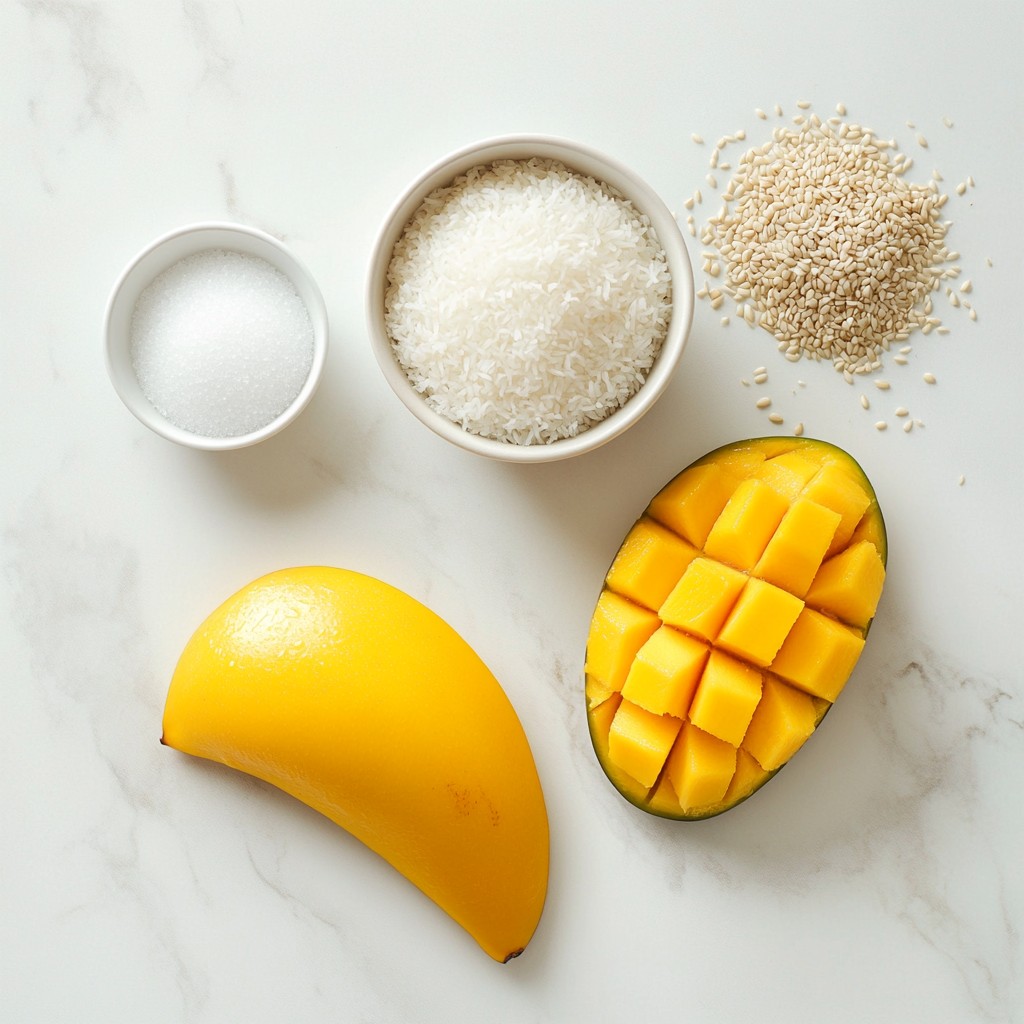
Main ingredients for Thai Mango Sticky Rice
To make Thai mango sticky rice, you need a few key items. Here is the list:
- 1 cup glutinous rice (sticky rice)
- 1 ½ cups coconut milk
- ½ cup sugar
- ½ teaspoon salt
- 2 ripe mangoes, peeled and sliced
Glutinous rice is the star of this dish. It gives the sticky texture you crave. Coconut milk adds rich creaminess, while sugar and salt balance the flavors.
Key cooking tools needed
You will need some essential tools to make this dish. Here’s what you should have:
- A steamer
- Cheesecloth or a fine mesh cloth
- A saucepan
- A mixing bowl
- A plate for serving
The steamer cooks the rice perfectly. Cheesecloth helps keep the rice from falling through. A saucepan is great for making the coconut sauce.
Optional garnishes for serving
To make your dessert extra special, consider these garnishes:
- Sesame seeds
- Mung beans
These toppings add a nice crunch and look pretty on the plate. You can choose one or both for added flair.
Step-by-Step Instructions
Preparing the glutinous rice
Start by rinsing the glutinous rice well. Use cold water and rinse until the water is clear. This step removes extra starch. After rinsing, soak the rice in water. Aim for at least 4 hours, but overnight is best. Soaking softens the rice and helps it cook evenly.
Cooking the sticky rice in a steamer
Once soaked, drain the rice. Line a steamer with cheesecloth. Place the rice in the steamer and spread it out. Steam for about 25 to 30 minutes. The rice should become tender and sticky. Check to ensure it cooks thoroughly. This method keeps the rice moist and fluffy.
Making the coconut sauce
While your rice is cooking, prepare the coconut sauce. In a saucepan, mix coconut milk, sugar, and salt. Heat over medium heat and stir until the sugar dissolves. Be careful not to boil the mixture. Set aside half a cup of the sauce for later. This sauce adds rich flavor to your dish.
Tips & Tricks
Perfecting the rice texture
To get the best texture, start with glutinous rice. Rinse it well until the water is clear. Soak the rice for at least four hours or overnight. This helps the rice absorb water. When you steam it, it will become soft and sticky. Steam the rice for 25-30 minutes. Check if it's tender by tasting a little. It should feel chewy but not hard.
Achieving the ideal coconut sauce consistency
For the coconut sauce, use fresh coconut milk for the best flavor. Combine the coconut milk, sugar, and salt in a saucepan. Heat it gently and stir until the sugar dissolves. Do not let it boil. Boiling can change the sauce's texture. You want it smooth and creamy. Reserve some sauce for drizzling later. This adds a nice touch when serving.
Serving suggestions for optimal presentation
When serving, mold the sticky rice into a portion on the plate. Place the sliced mango beside it. Drizzle the reserved coconut sauce over both the rice and mango. This makes your dish look beautiful and appetizing. For added crunch, sprinkle sesame seeds or mung beans on top. These little touches make a big difference in how your dish looks and tastes.
Pro Tips
- Soaking the Rice: For the best texture, soak the glutinous rice overnight. This helps achieve the signature sticky consistency.
- Steaming Technique: Use a cheesecloth to line the steamer. This prevents the rice from falling through while allowing steam to circulate evenly.
- Coconut Sauce Consistency: Make sure not to boil the coconut milk mixture. Gently heating allows the flavors to meld without losing the creamy texture.
- Serving Suggestions: For an appealing presentation, mold the sticky rice and fan out the mango slices. Garnish with sesame seeds or mung beans for added crunch.
Variations
Alternative fruits for topping
You can switch up the mango in your dish. Other fruits work well too. Try ripe bananas for a sweet twist. Pineapple adds a nice zing. If you like berries, strawberries or blueberries can be fun choices. Each fruit gives a new taste and color to your plate. Mix and match to find your favorite combo!
Vegan and dairy-free options
This dish is already vegan, but you can tweak it more. Use maple syrup instead of sugar for a different flavor. You can also swap coconut milk with almond milk for a lighter taste. Both options keep the dish creamy without dairy. These changes make it fit for everyone.
Different flavor enhancements (e.g., pandan, lime)
Add zest to your sticky rice with extra flavors. Pandan leaves give a nice green color and sweet aroma. Just steep them in the coconut sauce for a while. Lime juice can also brighten the dish. Drizzle some over the finished meal for a fresh kick. You can even mix in a little vanilla for warmth. These flavors will make your sticky rice even more exciting!
Storage Info
Best practices for storing leftovers
To keep your mango sticky rice fresh, store it in an airtight container. First, let it cool to room temperature. Then, place the sticky rice and mango slices in separate containers. This prevents the rice from getting soggy. You can also wrap sticky rice in plastic wrap for extra protection.
Reheating methods for sticky rice
When it’s time to enjoy leftovers, reheat sticky rice gently. You can use a steamer or microwave. For steaming, add a bit of water to the steamer. Heat for about 5-10 minutes until warm. In the microwave, place the rice in a bowl with a damp paper towel. Heat in short bursts, stirring in between, until warm.
Shelf life of ingredients
When stored properly, sticky rice lasts about 3-4 days in the fridge. The coconut sauce can last up to a week. Mangoes, when cut, should be eaten within 1-2 days for best flavor. Always check for signs of spoilage before eating.
FAQs
Can I use regular rice instead of glutinous rice?
No, you should not use regular rice. Glutinous rice is special. It gives the dish its sticky texture. Regular rice will not work well. The taste and feel will change. Stick to glutinous rice for the best results.
How can I ripen mangoes quickly?
To ripen mangoes fast, place them in a paper bag. Add an apple or banana to the bag. These fruits give off gas that helps mangoes ripen. Keep the bag at room temperature. Check daily until they are soft and sweet.
What can I substitute for coconut milk?
You can use almond milk or soy milk as a substitute. They have a different flavor but work well. For a closer match, try using canned coconut cream. This adds a rich taste without using coconut milk.
Thai Mango Sticky Rice is a delightful treat. We explored its main ingredients, key tools, and optional garnishes. I shared step-by-step cooking methods and important tips for perfecting the dish. We also discussed fun variations and proper storage for leftovers.
In the end, this dessert is about simplicity and joy. It's a great dish to share and enjoy with friends or family. You can create your own version with ease and confidence. Happy cooking!