
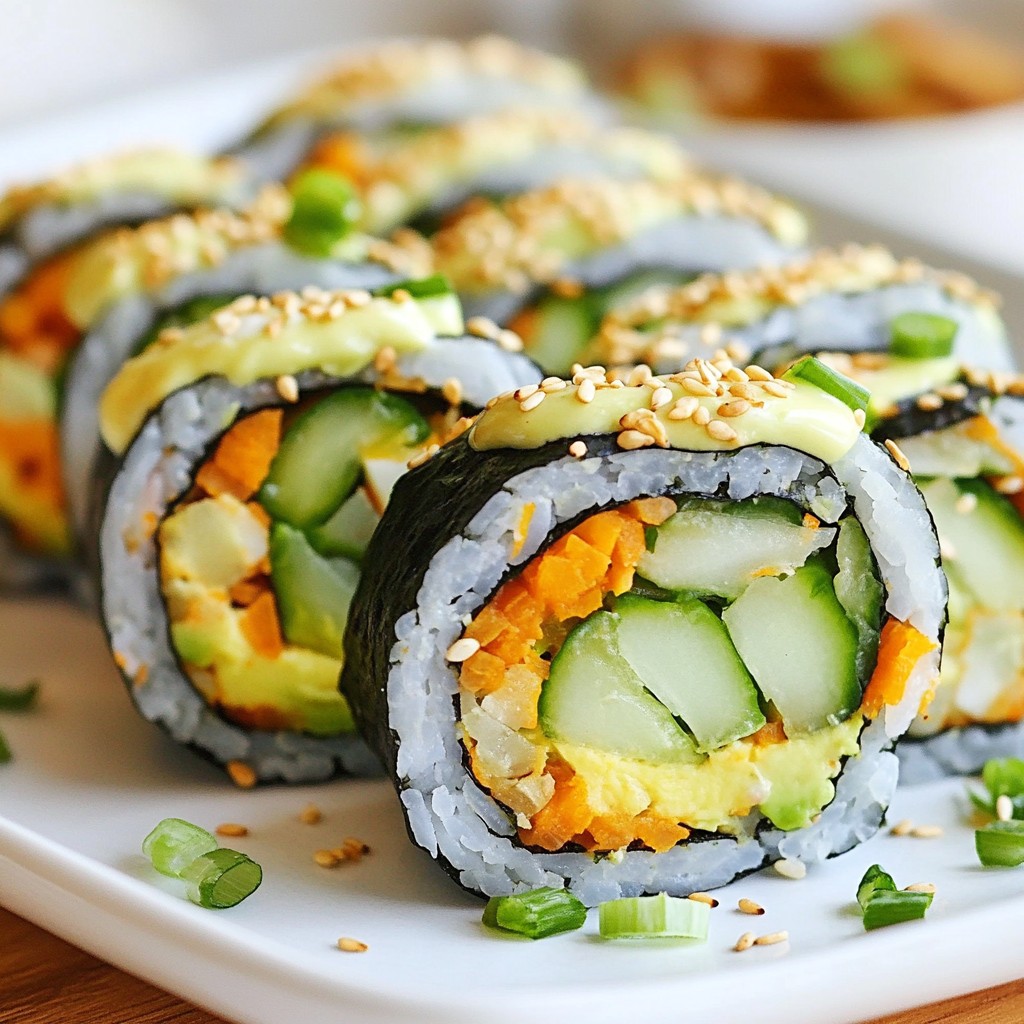
Craving a fresh, flavorful twist on sushi? My Spicy Cucumber Avocado Sushi is just what you need! This delightful recipe combines cool cucumbers and creamy avocado, packed with bold spices for an unforgettable taste. Whether you’re a sushi newbie or a seasoned pro, I’ll guide you through each step to create your perfect roll. Get ready to impress yourself and others with this easy and fun sushi dish!
Why I Love This Recipe
- Fresh Ingredients: This sushi rolls are packed with fresh vegetables, making them not only delicious but also healthy.
- Easy to Make: With simple steps and readily available ingredients, you can whip up these sushi rolls in no time.
- Customizable: You can easily swap out fillings based on your preferences, allowing for endless combinations.
- Flavorful Kick: The spicy mayo adds a delightful zing, making each bite exciting and full of flavor.
Ingredients
Main Ingredients List
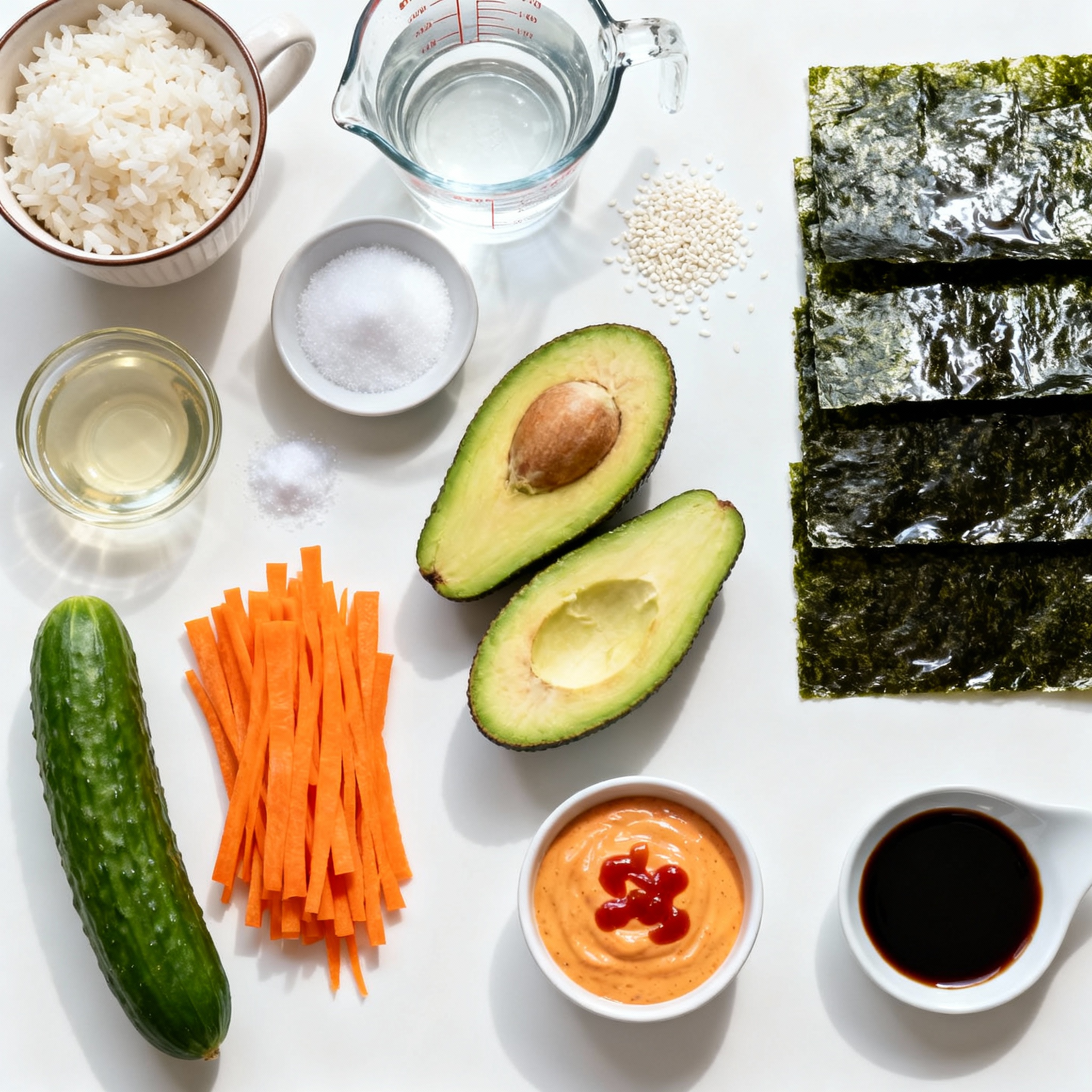
- 1 cup sushi rice
- 1 1/4 cups water
- 1 tablespoon rice vinegar
- 1 tablespoon sugar
- 1/2 teaspoon salt
- 1 large cucumber, julienned
- 1 ripe avocado, sliced
- 1 small carrot, julienned
- 2 tablespoons spicy mayo (mix mayonnaise with Sriracha to taste)
- 4 sheets of nori (seaweed sheets)
- Sesame seeds for garnish
- Soy sauce, for serving
Optional Ingredients for Customization
- Add sliced radishes for extra crunch.
- Use pickled ginger for a tangy twist.
- Substitute the spicy mayo with wasabi for heat.
- Try different veggies like bell peppers or daikon.
- Include fresh herbs like cilantro or basil for flavor.
Equipment Needed for Preparation
- Bamboo sushi mat for rolling.
- Sharp knife for slicing.
- Medium pot for cooking rice.
- Small bowl for mixing the vinegar dressing.
- Damp cloth for cleaning the knife.
- Large bowl for cooling the sushi rice.
These ingredients and tools will set you up for success. You can mix and match some ingredients to find your perfect flavor. Enjoy the process, and let your creativity shine!
Step-by-Step Instructions
Preparing Sushi Rice
To start, rinse the sushi rice under cold water. Keep rinsing until the water runs clear. This step removes excess starch and helps the rice cook better. Next, combine the rinsed rice with 1 1/4 cups of water in a medium pot. Bring it to a boil over medium heat. After it boils, cover the pot and reduce the heat to low. Cook for about 18 minutes. Once done, remove it from the heat but let it sit covered for an extra 10 minutes. This resting time makes the rice fluffy.
Seasoning the Rice
Now, we will season the rice. In a small bowl, mix 1 tablespoon of rice vinegar, 1 tablespoon of sugar, and 1/2 teaspoon of salt. Heat this mixture in the microwave for about 30 seconds. You want to dissolve the sugar fully. After the rice has rested, transfer it to a large bowl. Drizzle the vinegar mixture over the rice. Use a spatula to gently fold it in. This process keeps the rice grains separate and gives them flavor. Let the rice cool to room temperature before using it.
Assembling and Rolling the Sushi
Let’s assemble the sushi! Place a bamboo sushi mat on a flat surface. Take a sheet of nori and put it shiny side down on the mat. Wet your hands to avoid sticking. Spread a thin layer of sushi rice evenly over the nori. Leave about 1 inch at the top edge. Now, for the fun part! Line the middle of the rice with julienned cucumber, avocado slices, and carrot. Drizzle some spicy mayo on top for heat.
Starting from the bottom edge, lift the bamboo mat. Roll it over the filling tightly while tucking the ingredients in. Continue rolling until you reach the top edge of the nori. Wet the edge of the nori to seal the roll. Use a sharp knife to slice the roll into bite-sized pieces. Wipe the knife with a damp cloth between cuts to keep the edges clean. Finally, arrange the sushi on a plate, sprinkle sesame seeds on top, and serve with soy sauce for dipping. Enjoy your sushi creation!
Tips & Tricks
Selecting Fresh Ingredients
Choosing fresh ingredients makes all the difference. Look for firm cucumbers with shiny skin. The color should be bright green. For avocados, pick ones that yield slightly to gentle pressure. They should feel soft, but not mushy. Fresh carrots add a nice crunch. Always choose vibrant colors and avoid any blemishes.
Sushi Rolling Techniques
Rolling sushi can be tricky at first. Start with a bamboo mat. Lay the nori shiny side down. Wet your hands before spreading rice; this stops it from sticking. Use just enough rice to cover the nori, around 1/4 inch thick. After adding your fillings, roll it tightly. Use the mat to help shape it. Roll from the bottom, tucking fillings as you go. Seal the edge with a little water.
Common Mistakes to Avoid
Many beginners make the same mistakes. Don’t use too much rice; this makes rolling hard. Ensure your knife is sharp when slicing your sushi. Wipe it between cuts for clean edges. Avoid overstuffing with ingredients; this can cause spills. Lastly, let the rice cool before rolling. Hot rice can make the nori soggy. Following these tips will help you create perfect sushi rolls every time.
Pro Tips
- Use Fresh Ingredients: Always choose ripe avocados and fresh cucumbers for the best flavor and texture in your sushi rolls.
- Control the Heat: Adjust the amount of Sriracha in the spicy mayo to suit your spice tolerance. Start with a small amount and taste as you go.
- Wet Your Hands: Wetting your hands before handling sushi rice prevents it from sticking, making it easier to spread and roll.
- Sharp Knife for Slicing: Use a sharp knife to slice your sushi rolls. Wipe the blade with a damp cloth between cuts for clean, neat slices.
Variations
Alternative Fillings
You can mix up your spicy cucumber avocado sushi with different fillings. Try adding:
- Creamy cream cheese for richness.
- Thin slices of radish for a crunchy twist.
- Fresh herbs like cilantro or basil to freshen the taste.
- Sliced bell peppers for extra color and flavor.
These changes can make your sushi unique and fun. Feel free to experiment with flavors you love!
Sushi for Special Diets (Vegan, Gluten-Free)
This sushi is easy to adapt for special diets. To make it vegan, simply skip the spicy mayo or use a plant-based mayo. You can replace it with:
- Hummus for creaminess.
- Avocado oil for a lighter touch.
For gluten-free sushi, just use gluten-free soy sauce. Most rice and nori are naturally gluten-free, so you’re set!
Spicy Mayo Alternatives
If you want a different kick, consider these spicy mayo alternatives:
- Sriracha mixed with Greek yogurt for a tangy twist.
- Wasabi for a stronger flavor that packs heat.
- Harissa, a North African chili paste, brings a smoky note.
These options let you customize the heat level and flavor profile of your sushi. Enjoy mixing and matching!
Storage Info
Storing Leftover Sushi
Store leftover sushi in an airtight container. Wrap each roll tightly in plastic wrap. This keeps air out and helps prevent drying. If you have extra spicy mayo, store that separately. It stays fresh longer this way.
Best Practices for Reheating
Sushi is best fresh, but you may want to reheat some ingredients. If you do, avoid the microwave. It can make the rice tough. Instead, use a non-stick skillet. Heat on low for a few minutes. This warms the sushi without ruining it.
Shelf Life of Sliced Sushi
Sliced sushi lasts about one day in the fridge. If you notice any change in smell or texture, throw it away. Always check for freshness before eating. Sushi is safest when eaten right after making it.
FAQs
What type of rice is best for sushi?
The best rice for sushi is sushi rice. This rice is short-grain and sticky. It holds together well when rolled. You can find sushi rice at most grocery stores or Asian markets. Brands like Koshihikari are popular for sushi. Always rinse the rice before cooking to remove excess starch.
How do I make sushi without a bamboo mat?
You can still make sushi without a bamboo mat! Use a clean kitchen towel instead. Place a sheet of nori on the towel, shiny side down. Spread the rice on the nori, just like you would with a mat. Roll it tightly using the towel to help. This method works great in a pinch!
Can I freeze homemade sushi?
Yes, you can freeze homemade sushi! Wrap each piece in plastic wrap tightly. Then, place the wrapped pieces in a freezer bag. Sushi can stay fresh for up to a month in the freezer. When ready to eat, let it thaw in the fridge overnight. Enjoy your sushi fresh!
In this post, we explored the key ingredients for sushi, from rice to fillings. I shared step-by-step instructions to prepare, season, and roll sushi perfectly. You learned tips to select fresh items and avoid mistakes. We also covered variations for different diets and how to store sushi safely. My final thought is that making sushi is fun and rewarding. With practice, you can create your own delicious rolls at home. Enjoy your sushi-making journey!